Category: Blog

  • The Architecture of Accountability

    The Architecture of Accountability

    Why Volunteering is a Binding Contract

    If you raise your hand for a project or request professional development from a senior peer, you are initializing an operational contract. When you no-show or abandon the deliverable, you aren’t just breaking a date—you are demonstrating that you cannot handle the complexity of higher-level responsibility.

    The Hook: Hand-Raisers vs. Hand-Deliverers

    In the early stages of an administrative career, project work is almost always transactional. An Emerging Executor is typically assigned projects—handed a pre-defined scope of work and told to execute. It is a necessary phase for building foundational execution skills.

    But as you evolve into a strategically-minded Temporal Engineer, the source of your projects must shift. You stop waiting for a hand-down; instead, you begin to independently audit the administrative infrastructure, identify systemic process gaps, and ideate your own solutions. Strategic EAs do not just manage projects—they create them out of a need to eliminate operational chaos.

    To be clear: no matter where you operate on this spectrum, a baseline of assigned projects will always exist out of sheer operational necessity. Whether it is navigating the strict compliance of an international visa application for your executive or coordinating a sudden office reallocation, certain tasks simply must be executed to keep the engine running. The distinction lies in what you do beyond the baseline. Are you merely executing someone else’s roadmap for your entire day, or are you actively designing your own? Moving from a purely reactive executor to a proactive temporal architect is the definitive threshold of career development.

    Before you step into any project, whether assigned or self-identified, you must audit the structural integrity of your choice. Why, exactly, are you volunteering to build this specific system? If it is out of a reactive habit to look busy, you are simply inviting entropy into your calendar.

    True workflow alchemy requires you to treat time as capital. Before initiation, look at your self-generated concept and ask: What KPI will you track, and how exactly is success measured? If you cannot quantify the ROI of your design, you cannot defend the space it occupies to leadership.

    The Breakdown: The True Cost of a No-Show

    To an Emerging Executor, a canceled meeting, a ghosted sync, or a stalled milestone feels like a minor calendar blip—perhaps even a welcome pocket of free time. But to a Temporal Engineer, a no-show is a critical structural failure. It represents a sudden, unhedged leak of organizational capital, momentum, and focus.

    When a stakeholder or peer fails to show up for an engineered timeline, the damage ripples far past the lost block on the grid. Consider a scenario that plays out in corporate offices every single day: A peer requests a full hour of your time for training on a complex operational process—like navigating an international visa application. You agree, blocking the time and spending 30 minutes beforehand digging through your files, pulling legacy links, and compiling tips to ensure a high-value session. Then, five minutes before the meeting, they cancel. The reason? They decided to pivot to other priorities, noting they managed to find the information on their own anyway.

    This leaves a glaring operational question: Why did they request your time in the first place?

    When people treat your calendar as a safety net for their own uncompleted research, they are outsourcing their labor at the expense of your efficiency. Before you simply click “Reschedule” and sweep this behavior under the rug, you must audit the true cost of the friction. Ask yourself: What is the literal total value of the human capital burned in this transaction? You didn’t just lose the hour of the meeting itself; you lost the deep-work prep time beforehand, and the mental switching costs required to refocus your brain afterward.

    Beyond the balance sheet lies the psychological cost: the erosion of professional respect. Every time an initiative suffers a last-minute ghosting, it signals that your time is a flexible buffer rather than a rigid boundary.

    Are you actively documenting these calendar leaks, or are you quietly absorbing the friction to keep the peace? If you constantly accommodate this behavior without enforcing a boundary, you aren’t being collaborative—you are subsidizing operational bankruptcy and letting others mismanage your most finite resource.

    The Architect’s Blueprint for True Ownership

    Enforcing accountability does not require corporate warfare; it requires structural integrity. When a peer or stakeholder mismanages your time, a Temporal Engineer does not complain, and they certainly do not quietly suffer. They issue a system correction.

    If a same-day cancellation is inevitable, utilizing a real-time communication channel like Slack or Teams is the logistically correct choice. The breakdown isn’t the medium; it’s the behavior. True ownership means holding others to the same rigorous standard of time management that you hold yourself to.

    When that baseline is violated, you must deliver an immediate, professional, yet unyielding feedback loop. You aren’t being difficult—you are protecting the firm’s operational velocity. The next time someone attempts to treat your calendar as a disposable resource, deploy the Three-Step Structural Correction:

    1. Acknowledge the Data: Confirm receipt of the cancellation calmly. Do not offer emotional platitudes like “No worries!” or “It’s totally fine!” It is not fine, and language like that subsidizes their bad behavior.
    2. Expose the Sunk Cost: Explicitly state the preparation and time that was allocated to support them. They need to see the invisible wake of their disruption.
    3. Establish the Future Border: Clearly define the standard for any future operational requests.

    When that peer canceled five minutes before our training session because they “figured it out on their own,” the response wasn’t a passive click of the reschedule button. The correction was direct: “I’m glad you found the data. Moving forward, please ensure you conduct that preliminary research before requesting a block on my calendar. I carved out an hour for this and spent 30 minutes pulling legacy files to prepare for you, which is now unrecoverable deep-work time. Let’s make sure we protect that runway next time.”

    It is polite. It is professional. And the underlying operational message is unmissable: Do not waste my time again.

    Audit your recent communications and ask yourself: How many times have you typed “No problem!” when a peer completely disrupted your workflow? Every time you soften a boundary to avoid a brief moment of professional discomfort, you invite further chaos into your ecosystem. True architects do not apologize for defending the structural integrity of their day.

    The Concluding Truth

    At its core, the architecture of accountability isn’t about being rigid or unyielding for the sake of it. It is about a fundamental truth that every elite Temporal Engineer eventually learns: You teach people how to treat your time.

    If you treat your calendar like a chaotic public square where anyone can drop a meeting, pivot on a whim, or outsource their basic research at the last minute, that is exactly how the organization will treat you. But when you treat your time like a finite, high-value corporate asset, you change the entire dynamic of your partnership.

    Stepping away from reflex phrases like “no worries” and stepping into firm, professional boundary-setting can feel uncomfortable at first. But true collaboration cannot exist without mutual respect for operational capacity.

    When you defend your boundaries, you aren’t slowing the team down—you are protecting the strategic velocity of the business. You are moving from a passive spectator of your day to the master architect of your impact. Lock your systems down, hold the standard high, and build an infrastructure that lasts.

    You don’t get to practice being a Strategic Partner one day when you get the right title. You practice it right now by being impeccable with your word to the peers who are trying to help you climb.


  • The Mean Admin Club

    The Mean Admin Club

    Engineering Your Defense Against Workplace Friction

    Every master architect knows that the greatest threat to a beautifully designed structure isn’t a sudden storm—it’s internal friction.

    In the administrative profession, that friction often takes a specific, toxic form: the Mean Admin Club. These individuals rely on micro-aggressions, information hoarding, and passive-aggressive maneuvering to influence their environment. Instead of building systems and each other up, their operational goal is to keep peers off balance, emotional, and reactive.

    As a Temporal Engineer and Workflow Alchemist, you cannot allow toxic group dynamics to degrade your operational efficiency or compromise your partnership with your executive. Here is how to analyze the breakdown, audit the threat, and deploy precise countermeasures.

    The Blueprint of a Toxic Operation

    In a healthy corporate infrastructure, you might encounter one or two dysfunctional actors. When they realize their tactics fail to yield results, they move on.

    However, in a toxic environment, this behavior is tolerated or even enabled by leadership. I once navigated a highly political landscape where the old guard protected their territory through intimidation, gossip, and actively pushing back against new leaders hired to improve metrics.

    In that specific ecosystem, I encountered an admin who proudly self-identified as a difficult person. Over time, their operational flaws became obvious:

    • Information Hoarding: They refused to share best practices, opting to weaponize knowledge instead of distributing it.
    • Unreliability: They routinely dumped peer work or backed out of simple agreements, such as conference room bookings, at the last minute.
    • The Silent Treatment: when they perceived a slight—such as a peer not cleaning up a retirement party organized by their own department—they deployed weeks of complete silence rather than engaging in rational communication.

    When an administrator spends more time managing grudges than managing workflows, they become a systemic liability.

    The Diagnostic: How to Spot the Saboteur

    Let’s face it: very few bullies will announce their toxic tendencies, you must listen to their words and observe their behavior. Watch for these key indicators:

    1. Knowledge Hoarding: They view information as leverage rather than an asset to optimize team performance.
    2. Authority Bludgeoning: They use their executive’s title or their own tenure to throw weight around, frequently flying off the handle over mundane operational details.
    3. The Mirror Effect: They treat people with performative kindness to their faces, only to immediately tear down their outfits, intellect, or work product the moment they walk away.

    Operational Countermeasures: Alchemical Defenses

    When dealing with a workplace bully, your goal is simple: maintain your structural integrity and let their chaos consume them. Do not lash out. Bullies despise rational adults. Instead, deploy these four strategic workflows:

    1. Eliminate Disposable Communication

    Toxic actors prefer untraceable mediums—verbal side-chats, quick instant messages, or texts—because they hate accountability. Documentation!

    The Alchemical Rule: Always follow up disposable communication with a written email summarizing the facts, timelines, and commitments. Build a paper trail they cannot rewrite.

    2. Execute Flawless Work Product

    Your output is your shield. Execute your responsibilities to the highest standard. When your systems are sound and your logistics are flawless, a bully has zero leverage to use against you.

    3. Log the Data (Outside the Network)

    When friction occurs, perform an emotional brain dump via journaling to clear your headspace—but keep that entirely in your personal space. Afterwards, extract the objective data points: dates, times, specific actions, and business impacts. Store this factual documentation securely. If you ever need to escalate the issue to leadership or HR, you will be presenting a business case, not an emotional grievance.

    4. Minimize Contact and Stand Your Ground

    You were hired to engineer a strategic partnership with your executive, not to clear the path for a peer’s lack of accountability. Keep your interactions highly professional, brief, and anchored strictly to company templates and standard operating procedures.

    The Natural Conclusion of Entropy

    When leadership eventually holds the administrative ecosystem accountable, bad actors inevitably flame out. They will take excessive leaves of absence, amplify complaints of mistreatment, and ultimately exit the organization, often on short notice.

    When the descent begins, notice who distances themselves to save their own skin—those former co-conspirators are not your allies either.

    Protect your time, guard your energy, and keep your focus on the executive(s) you support. If the environment proves completely unfixable, use your engineered skill set to build an exit strategy to a team that values true strategic partnership.

  • The Annual Cleanse: Why the Calendar Audit is an EA’s Secret Weapon

    The Annual Cleanse: Why the Calendar Audit is an EA’s Secret Weapon

    One of the most valuable contributions an EA can make is returning the gift of time to their leader. While managing a calendar often feels like a game of Tetris—simply fitting blocks where they fit—the truly strategic EA acts as a curator. This is where the Calendar Audit becomes essential.

    For an executive who owns and hosts numerous recurring meetings, attendee lists can quickly become bloated. People change roles, projects pivot, and suddenly, a lean decision-making session has transformed into a forty-person meeting. Here is how to conduct a professional audit to ensure your executive is surrounded only by the people they actually need.

    1. Establish the Accuracy Metric

    Before you touch a single invite, you must understand the why behind the meeting. Use your weekly sync to categorize your executive’s meetings into three buckets:

    • Decision-Making: Small, agile groups required to greenlight projects.
    • Information Sharing: Larger groups designed for alignment and updates.
    • Brainstorming: Creative sessions where diverse perspectives are the priority.

    Accuracy isn’t just about who is in the room; it’s about ensuring the attendees align with the meeting’s specific purpose.

    2. The Step-by-Step Audit Process

    Once you have the context, follow this systematic approach:

    • Review the Legacy List: Look at recurring meetings that have been on the books for more than 90 days. Cross-reference the attendee list with the company directory. You will likely find people who have left the department or the company entirely.
    • Analyze Attendance Patterns: Use your Contextual Intelligence during meetings. If you notice an individual has accepted but hasn’t attended or contributed in a month, they are a prime candidate for the optional list.
    • Identify the Bottlenecks: Is the meeting frequently delayed because one specific person is always late? Is it stalled because a key decision-maker is missing? Adjusting the attendee list is often the solution to these operational friction points.

    3. Executing the Soft Move

    Removing someone from a meeting invitation can be politically sensitive. As the EA, you are the enforcer of efficiency, but you must do so with diplomacy. Instead of a cold deletion, use a soft move strategy:

    • Move to Optional: Shift non-essential stakeholders to the optional category so they stay informed but aren’t required to attend.
    • The Follow-up Summary: Propose that instead of attending, certain individuals receive the meeting minutes or the Action Item summary you create. This keeps them in the loop without costing them an hour of their day.

    4. Presenting Your Findings

    Don’t make these changes in a vacuum. Present your audit to your executive during your weekly sync using data to present your observations, analysis, and recommended actions.

    Observation: “I noticed the Tuesday Sync has grown to 15 people, but only four are active contributors.”

    Analysis: “This is likely diluting the focus and making it harder for you to reach a consensus.”

    Action: “I’ve drafted a revised invite list that moves six people to ‘Optional/FYI’ and replaces the invite with a summary email. Would you like me to push this update today?”

    By auditing the calendar, you aren’t just managing a schedule; you are optimizing the organization’s most expensive resource: leadership time. When you ensure the right people are in the room, you make your executive unstoppable.

    5. Install a Governance Mechanism: The Meeting Request Template

    As a Temporal Engineer, you aren’t just a gatekeeper; you are a guardian of organizational energy. To prevent calendar creep, a repeatable mechanism forces intentionality before meetings are updated. I recommend implementing a Meeting Request Template.

    This is a one-page blueprint every requester must complete, outlining the essential architecture of the sync: the precise length, the type (is this a Status check, a Decision-making session, or purely Informational?), and a hard-line attendee list that distinguishes the Mission Critical required attendees vs the optional observers.

    Pro Tip from the Trenches: no matter how long you’ve been working with your executive, review the meeting request and attendees, then copy and paste the completed template directly into the calendar invite body.

    Pro Tip from the Trenches: Include a “Meeting Update” section in the body of the invite. I like it at the top of the invite. This acts as your temporal log—a running list of every shift in date or time, the reason for the change, and the initials of the EA who made the change. It creates an audit trail that proves your value and keeps a history of the changes for everyone involved.


    Take back command of the calendar. Complete the form below to grab the exact Meeting Request Template & Calendar Audit Framework inside the Toolkit Vault. Protect your executive’s capacity and design a proactive gatekeeping workflow.

  • New year, fresh start

    New year, fresh start

    Hello admin pros! Grab a cuppa and check out my 2026 Strategy & The Workflow Audit.

    The Messy Truth

    2025 was a whirlwind year. In total, I provided support to nine Directors and one VP, due to a team change in April. Two EAs were on mat leave for half the year. The lead EA left Amazon 2 months after I arrived. I was voluntold to be the VP’s interim EA, which lasted 5 months. In September, I transferred my VP to the new Lead EA. In November, I onboarded a new Director. In December, the EA team was restructured. At this writing, I’m supporting two Directors in very different business units.

    Additionally, Amazon announced it was deprecating Chime and Quip in favor of Office 365, SharePoint, and Zoom. There was a series of rolling corporate office team restacks from April to October, across the US and Canada.

    I use rules and various folders in Outlook to manage email. In the process of managing incoming meeting requests and emails, my system became a bloated mess. I spent far too much time searching shared drives for documents.

    The New Year Reset

    My goal was to clean up my inbox and rules during the week between Christmas and New Year’s, but a shocking number of people were working that week, all wanting new meeting series. I was able to convert my executive’s standing meetings from Chime to Zoom, but that was as far as I got.

    I created a new workflow to manage calendars for 2026 to audit existing meetings and streamline my mechanisms, and determine the value of where my leaders and I spend our time.

    Personal & Business Goals for 2026

    • Personal goal: learn French at the B2 level. This will improve my Permanent Resident application score. I’m currently around A1.
    • Work goal: Reclaim 4 hours of deep work per week. I’ve got several ideas that will greatly improve my executives’ lives.
    • EA Mentor goal: increase my subscribers by providing new EA tools and content.

    The original mission of the EA Mentor was to build my coaching business. However, since I’m unable to generate income beyond my Amazon job, I’ve re-evaluated my goals for the site. I will continue to provide a manual for making that EA work visible and strategic, sharing data-driven mechanisms and contextual intelligence case studies. Subscribers will have exclusive access to checklists and tools useful to working EAs.

    The Workflow Audit

    In 2025, my time was spent on tactical calendar management and documenting org communication. My Lead EA will ultimately determine org mechanisms. The org suffers from silos that extend from leadership to the EA team.

    In December, I handed over the Director I onboarded with another Director. I worked hard last month to earn trust with my new team, but I have a lot to learn about the business. The new Director wants a partner, so I’ll focus more on strategic work and less time on the energy-draining churn.

    Not my actual desk since I work in a paperless office; it’s how I felt at the beginning of the year.

    As for Tools, my goal is to reduce the number of apps I use to manage work and essential documents. I don’t pay for apps at work. Instead, I use what the company provides. I’ll be offloading Asana, which my current org doesn’t use. Slack is heavily used for scheduling. I find this difficult to manage and prefer email. I’m going to investigate Slack workflows and see if I can create or modify a scheduling workflow.

    What I will stop in 2026: documenting interactions with my coworkers. My Lead EA asked me to provide documentation in Q4. There is more than enough material for her to run with.

    Now it’s your turn: What is the one task you are officially firing this quarter?

    Establish your strategic baseline. Complete the form below to gain immediate access to the 2026 Audit Checklist inside the Toolkit Vault. Audit the infrastructure, clear the operational drag, and start the cycle ahead of the game.

  • Engineering Your Outcomes with SMART Goals

    Engineering Your Outcomes with SMART Goals

    If a goal has no deadline, it’s just a wish—and in the executive suite, wishes don’t move the needle.

    As EAs, we are often the ones responsible for turning an executive’s vision into a reality. But if those goals aren’t structured correctly, you’ll find yourself lacking the motivation or the resources to actually cross the finish line. To transform your career from a calendar jockey to a Strategic Partner, you must master the art of data-driven goal setting.

    The Mechanism: The SMART Framework

    I use the SMART system to strip the ambiguity out of my objectives. This isn’t just a corporate acronym; it’s a filter for your time and energy:

    • Specific: Define the exact outcome. No “fluff”.
    • Measurable: Determine your data points. How will you prove success?
    • Achievable: Be honest about your variables. Is this actually possible with your current resources?
    • Relevant: Does this goal serve your executive’s needs or your career trajectory?
    • Time-specific: Set your Hard Stop and work backward to establish milestone dates.

    The Alchemist’s Edge: Interview Strategy

    Beyond daily project management, the SMART format is a secret weapon for career management.

    When you’re preparing for a new role or a promotion, take your past achievements and run them through this framework. It helps you develop compelling, cohesive stories that prove your value during an interview. You aren’t just saying you organized an event—you are showing how you engineered a specific, time-bound outcome.

    Install the Strategy

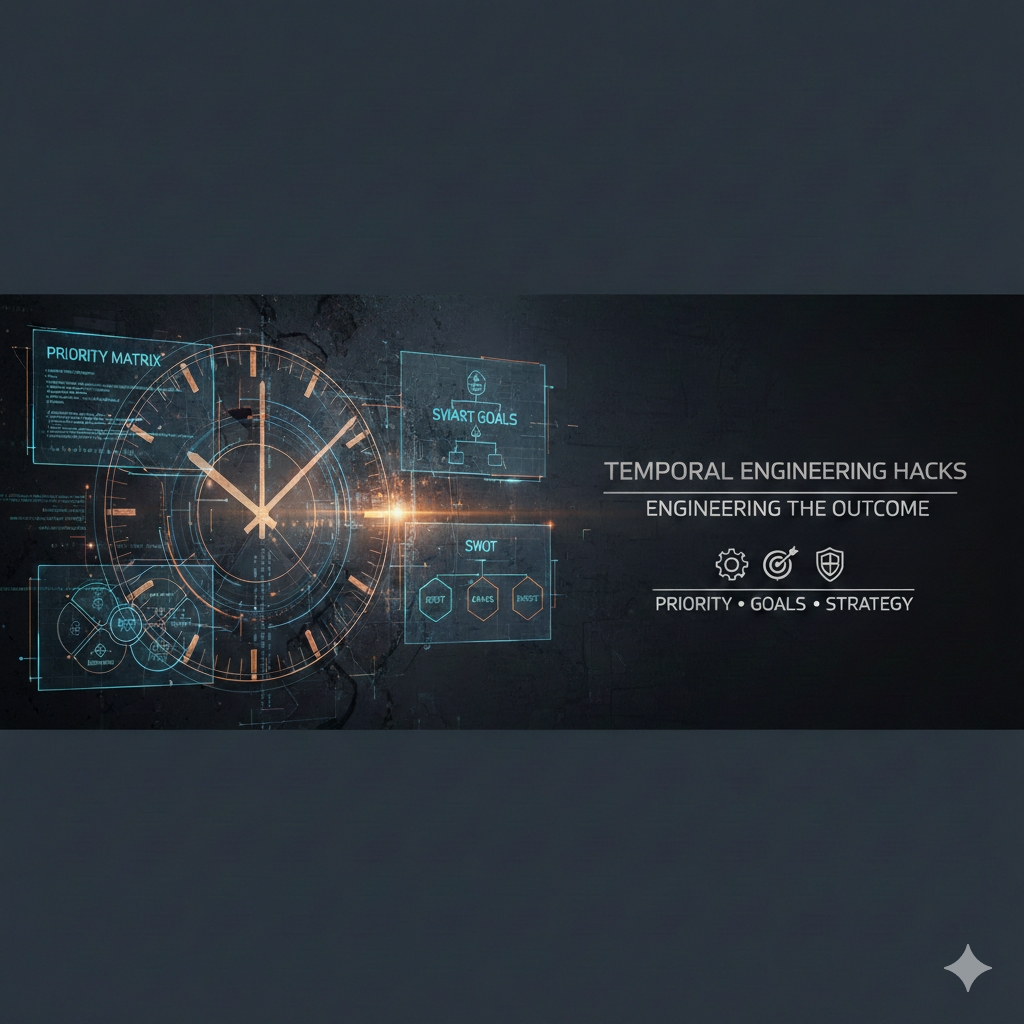
    This concludes our look at the Top 3 Tools for EAs. Whether you are using the Priority Matrix to survive a Bad Brain Day or SMART Goals to architect your next promotion, these systems are designed to help you work with precision.


    Equip your strategic control room. Complete the form below to instantly unlock the Strategy Trio Bundle (SMART Goals, SWOT Analysis, and Priority Matrix) inside the Toolkit Vault. Three high-leverage frameworks, delivered in a single master asset.

  • Engineering the Entry-Level EA: The Core Operational Mechanisms

    Engineering the Entry-Level EA: The Core Operational Mechanisms

    A standard job description often makes the Executive Assistant role sound tactical and simple. In reality, the role is a complex series of interconnected systems that require a high degree of technical and emotional intelligence to manage.

    Whether you are looking to enter the profession or want to educate your team on what you actually do, here is the blueprint for the entry-level EA skillset.

    1. The Trust Mechanism (The Foundation)

    Trust is the primary system upon which all other EA functions rely. Without it, you cannot be an effective partner.

    • System Integrity: Avoid gossip and stick to the facts at all times.
    • Reliability: Under-promise and over-deliver while consistently doing your best work.
    • Confidentiality: As the keeper of sensitive data, you must maintain absolute discretion.

    2. The Calendar & Travel Engine

    Managing time is about more than just booking slots; it is about protecting the executive’s capacity to lead.

    • Burnout Prevention: Proactively manage conflicts and ensure your leader has time for breaks, lunch, and dreaming up the Next Big Thing.
    • Global Logistics: Coordinate complex travel, including international visas, local customs, and specific leader preferences (like avoiding specific airports!).

    3. The Information & Document Pipeline

    An EA acts both as a court reporter and a librarian for the organization’s most important information.

    • Strategic Minutes: Even if you don’t understand the technical jargon at first, listen for action items, owners, and deadlines to keep the team aligned.
    • Digital Architecture: Master word processing, spreadsheets, and collaboration platforms like SharePoint or Google Drive to maintain document control.

    4. Tactical Troubleshooting & Event Management

    EAs are the boots on the ground for office operations.

    • Tech Literacy: Be prepared to troubleshoot everything from printers to the day-to-day apps.
    • Event Coordination: Manage the gears of off-sites and conferences, including catering, AV, and guest lists.
    • Space Management: Effectively manage desk and office assignments while navigating the weirdly possessive feelings people have about their workspace.

    5. The Pulse Monitor (Communication)

    You are often the bridge between the executive and the rest of the organization.

    • Internal Intelligence: Your leader relies on you to understand the pulse of the team—knowing who is dissatisfied or what the common concerns are.
    • Fact-Based Reporting: Share observations with your leader without snitching by focusing strictly on facts rather than emotions.

    The Outcome

    Being an EA is not about running errands or getting coffee—it is about exceeding expectations every day. It is a demanding role that, when engineered correctly, leads to a long and successful career.

    Master the logic. Rule the clock.