
Articles

  • Engineering the Foundation: Why Trust is the Ultimate Mechanism for EAs

    Engineering the Foundation: Why Trust is the Ultimate Mechanism for EAs

    In any high-performance system, the quality of the output depends entirely on the stability of the foundation. For a Temporal Engineer, that foundation is Trust. While tactical skills like scheduling and scribing are necessary, trust is the strategic mechanism that enables you to operate at peak efficiency.

    Building trust isn’t just about your relationship with your executive; it’s about creating a network of reliability that includes their direct reports, stakeholders, business partners, and your fellow administrative professionals.

    Here is how a high-trust environment functions as a force multiplier for your career.

    The Mechanics of a High-Trust System

    When trust is successfully installed across your professional network, it activates four critical operational benefits:

    • Open Communication: In a high-trust environment, team members feel safe sharing ideas, feedback, and diverse opinions without fear. This leads to superior decision-making because all viewpoints are evaluated openly.
    • Fluid Collaboration: Trust allows team members to prioritize the success of the organization over individual interests. The result is a more productive and efficient work environment where everyone moves toward a common goal.
    • Increased Accountability: When trust exists, peers hold each other accountable for their responsibilities. This creates a culture of ownership where every team member is invested in the final outcome.
    • External Reliability: Trust extends beyond internal teams to clients and customers. When they trust that the business will deliver on its promises, it leads to long-term relationships and increased revenue.

    The High Cost of System Failure

    Losing trust is perhaps the most significant hurdle an EA can face. When the trust mechanism fails, the damage is widespread:

    • Reputational Damage: Your professional standing within the organization is compromised.
    • Operational Workarounds: Coworkers will begin to work around you rather than with you, making your role obsolete.
    • Inefficiency: Your ability to do your job effectively disappears when you are no longer the trusted gatekeeper of information.

    Installing Trust: A Consistent Effort

    Trust is not a one-time task you check off; it is a mechanism that requires constant attention. It requires:

    • Consistency: Being reliable in every interaction over time.
    • Transparency: Communicating honestly and following through on every commitment.
    • Integrity: Having the willingness to admit mistakes and take full responsibility for them.

    The Outcome

    Earning and maintaining trust is the highest priority for any executive assistant aiming to be a strategic partner. By building this foundation, you ensure that every other mechanism in your toolkit—from calendar management to project ownership—operates without friction.

    Master the logic. Rule the clock.
  • Engineering the Calendar: Strategies for the Control Freak Executive

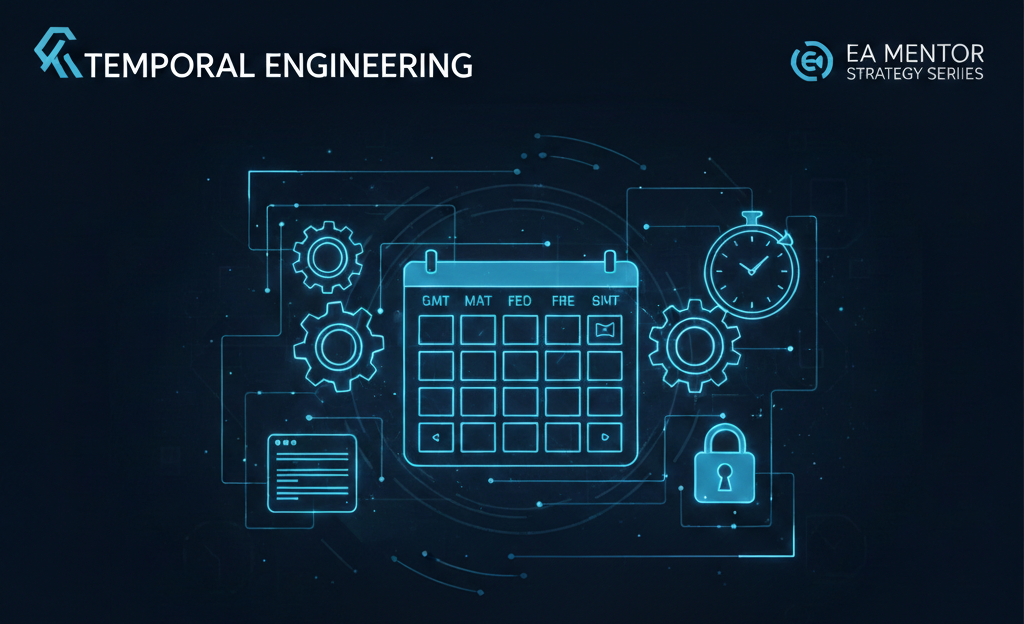
    Engineering the Calendar: Strategies for the Control Freak Executive

    In the blueprint of a high-functioning partnership, the Executive Assistant manages the calendar. But what happens when the mechanism stalls because your executive refuses to relinquish control? This friction can lead to missed meetings, a damaged professional reputation, and a deep sense of frustration.

    At the heart of this resistance is usually a lack of trust. Perhaps they’ve been burned by an ineffective EA in the past, or they simply struggle with the Control Freak archetype. Regardless of the cause, as a Temporal Engineer, your task is to diagnose the issue and find a collaborative solution together.

    1. Initiate Clear Communication

    The first step in any system repair is direct feedback. At your next sync, discuss how this bottleneck is affecting your ability to do your job.

    Don’t just complain —bring data and solutions. Use concrete examples to illustrate the operational failure:

    • Missed Opportunities: How many meetings were missed because you couldn’t proactively resolve conflicts?
    • Team Impact: What is the hidden cost in hours the team spent preparing for meetings the leader failed to attend?
    • Reputation Audit: What feedback are you receiving from stakeholders regarding the leader’s availability?

    2. Find the Common Ground

    Once the problem is on the table, you must identify the barrier. Work together to engineer a mechanism that accommodates both of your needs.

    This is a team of two. Be willing to compromise as you develop your working style. For instance, I once supported a leader who gave me control but required a five-minute warning before every session. Initially, this was a manual burden for me , but over time, as we refined our system and trust grew, we limited those warnings only to high-stakes meetings.

    3. Peer-to-Peer Diagnostics

    If your internal efforts are failing, tap into the wider network of EAs. Every experienced admin has faced this Control Freak barrier. Seek guidance on the specific tips or creative calendar management techniques they used to successfully gain control.

    4. The Last Resort: Know When to Decommission

    If you have tried every mechanism in your toolkit and the executive still refuses to trust you, it may be time to move on. Some leaders will never value the strategic advantage an EA provides, and staying in that environment will eventually damage your performance, attitude, and reputation.

    You are likely not the first EA to hit this wall with them. Take the lessons you’ve learned about trust and calendar management and apply them to a role where your expertise is fully utilized.

    The Outcome

    Managing a calendar-clinging executive is challenging, but not impossible. Through clear communication and persistence, you can earn your leader’s trust and respect from the wider team.

    Master the logic. Rule the clock.