Category: Subscriber Exclusive

Content exclusively available to EA Mentor subscribers.

  • Engineering Your First 90 Days

    Engineering Your First 90 Days

    Starting a new role as an Executive Assistant (my cheeky term is Temporal Engineer) is both exciting and high-stakes. The first 90 days are your onboarding period—the time to learn your processes, earn trust, and align with your executive’s workflow.

    Here is how to engineer a successful launch.

    Phase 1: Diagnostic & Discovery (Days 1–30)

    Your first month is about gathering data and understanding the existing architecture.

    • The Playbook Search: Identify where key documents, contacts, and historical records are kept. If a Handover Playbook doesn’t exist, start building one immediately.
    • Stakeholder Mapping: Identify the key players, proxies, and influencers within the organization. Who does your executive rely on most?
    • Calibration Syncs: Meet with your leader frequently. Ask: “How do you prefer to receive information? What are your ‘non-negotiables’ for the calendar?”

    Phase 2: System Installation (Days 31–60)

    Now that you have the data, begin implementing your strategic mechanisms.

    • Master the Calendar: Transition from simply observing the schedule to proactively defending it. Start resolving conflicts before they reach the executive.
    • Refine the Pipeline: Standardize how meeting minutes are taken and how action items are tracked.
    • The Pulse Check: Begin observing the team culture. Start reporting back factual observations to your leader to help them lead more effectively.

    Phase 3: Optimization & Branding (Days 61–90)

    By day 90, you should move from learning the system to optimizing the workflow.

    • Identify Gaps: Look for inefficiencies in the current workflow and propose updates. (e.g., “I noticed our travel booking process is manual; I’ve designed a template to streamline this.”)
    • Establish Your Brand: What do you want to be known for? Whether it’s data analysis, project management, or event orchestration, start teaching the team to fish in your area of expertise.

    The Outcome

    The first 90 days aren’t just about surviving; they are about establishing yourself as a vital component of the leadership team. By the end of this period, your onboarding is complete, and you are ready to dive deeply into your new team.

    Master the logic. Rule the clock.
  • Engineering Your Outcomes with SMART Goals

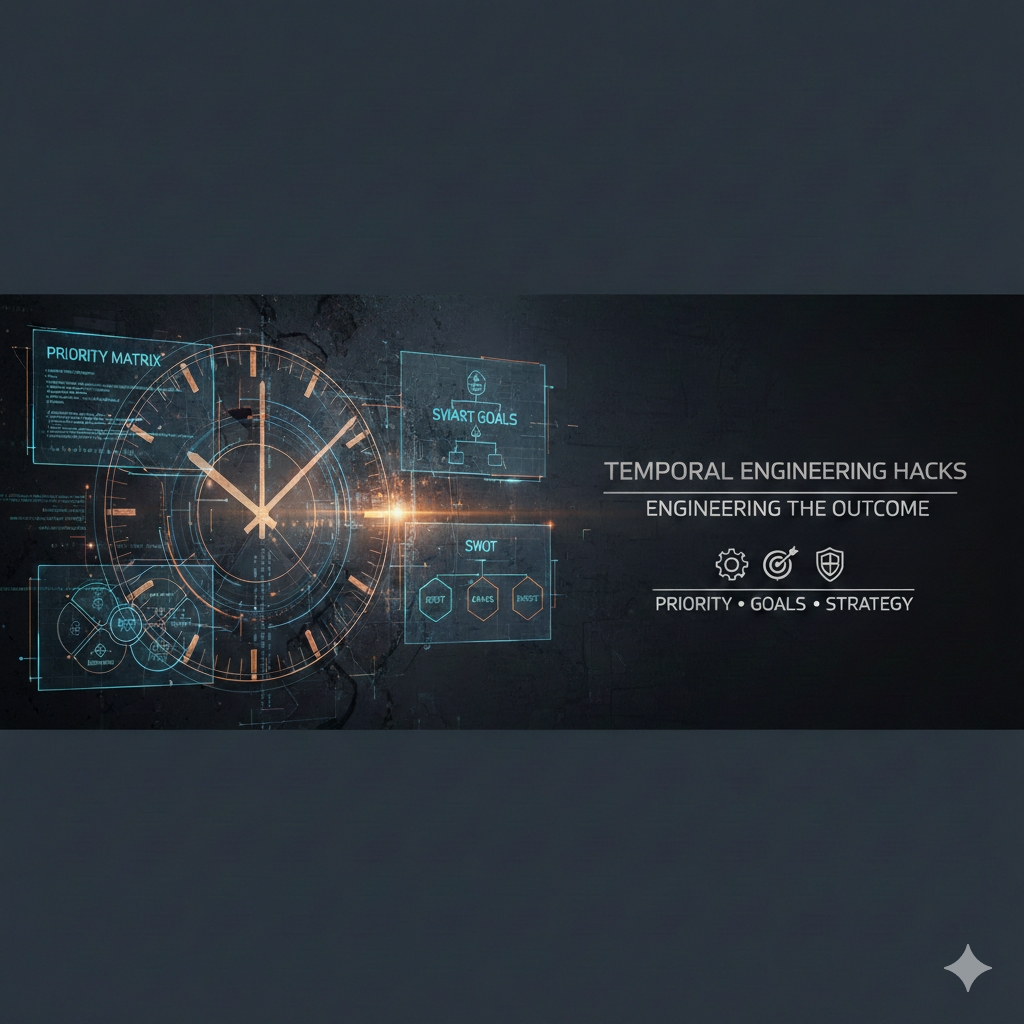
    Engineering Your Outcomes with SMART Goals

    If a goal has no deadline, it’s just a wish—and in the executive suite, wishes don’t move the needle.

    As EAs, we are often the ones responsible for turning an executive’s vision into a reality. But if those goals aren’t structured correctly, you’ll find yourself lacking the motivation or the resources to actually cross the finish line. To transform your career from a calendar jockey to a Strategic Partner, you must master the art of data-driven goal setting.

    The Mechanism: The SMART Framework

    I use the SMART system to strip the ambiguity out of my objectives. This isn’t just a corporate acronym; it’s a filter for your time and energy:

    • Specific: Define the exact outcome. No “fluff”.
    • Measurable: Determine your data points. How will you prove success?
    • Achievable: Be honest about your variables. Is this actually possible with your current resources?
    • Relevant: Does this goal serve your executive’s needs or your career trajectory?
    • Time-specific: Set your Hard Stop and work backward to establish milestone dates.

    The Alchemist’s Edge: Interview Strategy

    Beyond daily project management, the SMART format is a secret weapon for career management.

    When you’re preparing for a new role or a promotion, take your past achievements and run them through this framework. It helps you develop compelling, cohesive stories that prove your value during an interview. You aren’t just saying you organized an event—you are showing how you engineered a specific, time-bound outcome.

    Install the Strategy

    This concludes our look at the Top 3 Tools for EAs. Whether you are using the Priority Matrix to survive a Bad Brain Day or SMART Goals to architect your next promotion, these systems are designed to help you work with precision.

    Get the Full System: I’ve compiled the Priority Matrix, SMART Goals, and SWOT Analysis into a single, editable EA Strategy Workbook.

    Join the EA Mentor Inner Circle to download the workbook and start making data-driven recommendations that transform your career.

  • Engineering Your Strategy with SWOT

    Engineering Your Strategy with SWOT

    In the executive world, a SWOT analysis is a standard mechanism used to make informed choices for product launches or market entries. For a Temporal Engineer, this tool is a high-level diagnostic for both your career architecture and your Executive’s business landscape.

    To move from a reactive state to a proactive partnership, you must be able to audit the variables around you.

    The Mechanism: The SWOT Framework

    SWOT allows you to categorize any professional situation into four distinct quadrants:

    • Strengths and Weaknesses: These are your internal data points. When auditing your own desk, these are the skills you excel at and the gaps in your technical stack. When auditing a project, these are the resources your team possesses versus the bottlenecks holding you back.
    • Opportunities: These are external factors you can capitalize on, such as a new software rollout that could automate your Executive’s reporting or a networking event that could connect your team with a key vendor.
    • Threats: These are external barriers that could impede progress, such as an upcoming budget cut, a shift in company leadership, or a sudden change in market stability.

    The Alchemist’s Audit: Beyond the Career Pivot

    While many use SWOT for a career pivot—analyzing the risks of moving from a tech giant to a non-profit—active EAs use it daily to stay three steps ahead of the business.

    1. Project Post-Mortems

    After a major board meeting or an offsite, use SWOT to analyze what happened. What were the internal strengths that made it successful? What external threats (like a travel delay or a tech failure) almost derailed it? This data ensures the next event is even more resilient.

    2. Stakeholder Mapping

    If your Executive is entering a difficult negotiation or a cross-functional project, run a SWOT on the opposition or the other departments involved. Understanding their potential weaknesses or the external threats they are facing allows you to help your Executive prepare a more effective strategy.

    3. The Annual Performance Review

    Instead of just listing your tasks from the year, present a SWOT analysis of your role. Show your Executive that you understand the opportunities for growth in the department and that you have identified the threats to their time. This moves the conversation from “what you did” to “how you think.”

    Install the Full Strategy

    This series has explored the foundational tools every strategic partner needs to master:

    1. The Priority Matrix: To filter the noise of daily emergencies and focus on what truly moves the needle.
    2. SMART Goals: To architect specific, measurable outcomes with clear deadlines.
    3. SWOT Analysis: To make informed, high-stakes decisions for your projects and your career.

    Get the Strategy Workbook

    I’ve compiled the templates for all three mechanisms—the Priority Matrix, SMART Goals, and SWOT Analysis—into a single, comprehensive EA Strategy Workbook.

    Join the EA Mentor Inner Circle to download the workbook and start transforming your professional data into a strategic partnership.

  • The Financial Aid Office Lesson

    The Financial Aid Office Lesson

    Back in college, I saw a sign behind a financial aid desk that changed my perspective on work forever. It read:

    “Your lack of planning does not constitute an emergency on my part.”

    At the time, it felt harsh. But after years in the executive suite, I realized that sign wasn’t about being rude—it was about boundaries and data.

    Every day, you are bombarded by stakeholders, vendors, and direct reports who all believe their request is the most important thing on your executive’s calendar. If you don’t have a system to filter that noise, you’ll spend 12 hours a day reacting to “emergencies” that aren’t actually important.

    To move from a calendar jockey to a Strategic Partner, you need to stop guessing and start analyzing.

    The Mechanism: The Priority Matrix

    I use the Priority Matrix to strip the emotion away from the to-do list. It’s a simple four-quadrant system that forces you to categorize tasks by Urgency and Importance.

    • High Urgency / High Importance: This is the “Engine Room.” Start here.
    • Low Urgency / Low Importance: These are “Someday Projects.” Be honest—if it stays here long enough, it’s probably not worth your time.

    I find this tool particularly valuable on Bad Brain Days—those days when you’re fighting a migraine or a lack of sleep and just need a clear map to follow. It takes the cognitive load off your shoulders and puts it onto the paper.

    Master the Strategy

    The Priority Matrix is just the first step in engineering a high-performance office. In my upcoming posts, I’ll be breaking down SMART Goals for long-term planning and SWOT Analysis for strategic decision-making.

    Ready to install these systems? I’ve compiled all three—the Priority Matrix, SMART Goals, and SWOT Analysis—into a single EA Strategy Workbook.

    Join the EA Mentor Inner Circle to download the full PDF and start transforming your data into a strategic partnership.

  • Engineering the Narrative: The Temporal Engineer’s Guide to Strategic Note-Taking

    Engineering the Narrative: The Temporal Engineer’s Guide to Strategic Note-Taking

    Today’s mechanism focuses on a skill often dismissed as clerical, but in the hands of a Temporal Engineer, it is a high-level diagnostic tool: Note-Taking.

    While this isn’t specifically about formal meeting minutes, the practice of master-level note-taking is the foundation upon which accurate minutes are built. If you are looking for strategies on handling complex or technical meeting records, you can revisit my deep dive on that system here.

    The Memory Myth

    Early in my career—while navigating the technical complexities of Environmental Health & Safety at Fred Hutch—I realized that “learning on the job” was impossible without a rigorous documentation strategy. I had to learn biohazard and chemical safety protocols in real-time while drafting newsletters and safety manuals.

    Data shows that only 0-10% of the population possesses an eidetic or photographic memory. Statistically, you are not in that bracket.

    As Executive Assistants, we deal with a high volume of task switching and the dreaded Drive-By—those unscheduled disruptions that sever your workflow threads. Relying on memory in this environment isn’t just risky; it’s an operational failure. Note-taking is the anchor that allows you to pick up those threads instantly.

    The Anatomy of a Strategic Note

    I’ve observed that administrative professionals who fail to take notes often fall into a cycle of apologizing, repeating questions, and missing deadlines. This doesn’t just hurt productivity; it fuels Imposter Syndrome.

    To engineer a better outcome, I treat my personal notes like minutes for myself. A strategic note should:

    • Summarize Instructions: Don’t record verbatim; capture the intent.
    • Identify Critical Data: Pinpoint due dates, task owners, and stakeholders.
    • Audit Resources: Note the tools and stakeholders required to move the needle.

    The Benefits of Documentation

    • Time Conservation: Capturing details accurately the first time prevents the loop-back where both you and your executive lose time re-explaining an assignment.
    • Predictive Analysis: Over time, your notes allow you to look around corners and identify patterns that others miss.
    • Institutional Knowledge: Notes serve as a reference for rarely used processes, executive preferences, and post-event lessons learned.

    Installing Your System

    Muscle memory requires a repeatable system. Whether you prefer a physical or digital install, the key is consistency.

    Physical Systems: I began with a paper-and-pen Daily Running List, much like a Bullet Journal, transferring unfinished tasks to ensure nothing was lost.

    Digital Systems: After carpal tunnel surgery made my handwriting a creative asset but a functional liability, I moved to digital. I’ve experimented with everything from Evernote and TeuxDeux to Goodnotes.

    Currently, my primary mechanism at work is OneNote. It integrates seamlessly with the Office suite, allowing me to link meeting details directly into my minutes for a simple, all-in-one solution.

    The Experiment

    If you haven’t found your groove yet, experiment. Try one system at a time, reflect on the data of what worked, and repeat until you hit your stride. The only rule? Pick one method. If you jot a note on a Post-it, move it into your primary system immediately.

    Master the logic. Rule the clock. Stop relying on your memory and start engineering your records.

  • Three Strategic Mechanisms for EA Leadership

    Three Strategic Mechanisms for EA Leadership

    In the traditional blueprint of an office, the Executive Assistant is often viewed solely through a tactical lens—scheduling, travel coordination, and scribing. But the role has evolved significantly. Today, a Temporal Engineer recognizes that leadership isn’t a title you are given; it’s a mechanism you install.

    You don’t need to manage a team or hold a “Lead” title to be a leader. Leadership is simply taking ownership, being proactive, and engineering outcomes that contribute to the organization’s success.

    Here are three ways to shift from tactical support to strategic leadership.

    1. Install a Strategic Mindset

    We hear the term “strategic” constantly, but in this system, it means understanding the long-term vision, goals, and objectives of your organization. You must become a diagnostic sensor for the challenges and opportunities facing your company.

    • Audit Your Knowledge: Do you know your organization’s top three products or services?
    • Seek Intelligence: Ask targeted questions to understand your leader’s specific objectives.
    • Be a Trendsetter: You have more power than you realize. If you have a big headache in your workflow, engineer a process to solve it without waiting for permission. When others see the efficiency of your new mechanism, they will adopt it.

    2. Command Ownership of Projects

    To build a high-performance career, doing the minimum is an operational failure. Leadership requires providing the value your executive didn’t even know they needed until you delivered it.

    • Exceed the Blueprint: Go beyond the expected scope to complete tasks to the absolute best of your ability.
    • Proactive Improvement: Identify stagnant processes and take the lead in implementing new initiatives.
    • Collaborative Control: Demonstrate your ability to manage projects by collaborating across departments to move the needle.

    3. Commit to Continuing Education

    In technology and in business, if you aren’t upgrading, you are becoming obsolete. I have seen countless apps like WordStar and WordPerfect vanish because they ceased to be relevant. A leader never stops learning.

    • Professional Development: Invest in yourself through conferences, workshops, and specialized training.
    • External Networking: Connect with peers outside your organization to stay ahead of industry best practices.
    • Expertise Certification: Pursue advanced degrees or certifications to verify your commitment to the profession.
    • Leverage Resources: Utilize professional organizations like IAAP, industry publications like Executive Support Magazine, or work with a coach to sharpen your edge.

    The Outcome

    By developing a strategic mindset, taking full ownership, and constantly upgrading your skills, you provide the insights and recommendations that demonstrate your true leadership potential. Stop asking for permission to lead and start engineering the success of your organization.

    Master the logic. Rule the clock.

  • Strategic Minute-Taking for Complex Subjects

    Strategic Minute-Taking for Complex Subjects

    As a Temporal Engineer, one of your most critical functions is capturing the Organizational Memory of a meeting. While note-taking is a personal diagnostic tool, Minute-Taking is a core leadership skill that transforms a chaotic discussion into a strategic record of alignment and action.

    Many EAs feel overwhelmed when dropped into meetings covering technical or complex topics that seem over their head. Early in my career at Fred Hutch, I had to record minutes for safety committees covering radiation and biohazards despite having a degree in technical theater. I learned that you don’t need to be a subject matter expert to produce high-quality minutes; you need a repeatable system.

    Here is how to engineer the narrative when the topic is complex.

    1. Pre-Flight and Post-Flight Reviews

    The Chairperson is your primary resource for ensuring accuracy. They want good minutes, so demonstrate your willingness to learn the lingo.

    • The Agenda Audit: Use the agenda as your blueprint. Meet with the Chair beforehand to understand the intended outcomes.
    • The Feedback Loop: After the meeting, clean up your draft and ask the Chair for a specific review. You will likely get acronyms or technical terms wrong at first, but this review process is how you learn.

    2. Develop Your Question Code

    Meetings move at the speed of light. Unless an item is of legal or HR importance, do not stop the flow to ask for a definition.

    • The Diagnostic Symbol: Develop a shorthand code (like a specific symbol or highlighted text) to mark areas where you need clarification later.
    • Post-Meeting Clarification: Use your code as a reminder to follow up with the Chair or a specific attendee after the session.

    3. Transcribe, Don’t Summarize (Initially)

    The most common mistake is trying to summarize complex material during the meeting. If you don’t understand the topic yet, your summary will likely be inaccurate.

    • Live Transcription: Act like a court reporter. Focus on recording the discussion verbatim where possible, ignoring grammar and formatting for the moment.
    • The Golden Window: Block 1.5–2 hours immediately after the meeting to finalize the document. The discussion is still in your short-term memory now; it may be gone by morning.

    4. Track the Action Items

    The primary function of minutes is to track group alignment and action. Without clear tasks, the meeting should have been an email.

    • Speak Up for Clarity: If an action item, owner, or deadline isn’t made clear during the discussion, this is the one time you should speak up and ask for clarification.

    5. Tactical Training

    To become a strategic partner, you must learn the language of the business.

    • Shadow the Experts: Take the same basic training courses the technical teams are required to take. It shows a sincere desire to understand the material and builds trust with your team.
    • Find a Subject Mentor: If your executive is too busy, find someone in the group who loves to “geek out” on their expertise and let them show you the ropes.

    The Outcome

    By following this system, you move from simply “taking notes” to becoming a guardian of institutional knowledge. You don’t have to start with an understanding of the topic to end with a high-quality strategic record.

    Master the logic. Rule the clock.

  • Engineering the Foundation: Why Trust is the Ultimate Mechanism for EAs

    Engineering the Foundation: Why Trust is the Ultimate Mechanism for EAs

    In any high-performance system, the quality of the output depends entirely on the stability of the foundation. For a Temporal Engineer, that foundation is Trust. While tactical skills like scheduling and scribing are necessary, trust is the strategic mechanism that enables you to operate at peak efficiency.

    Building trust isn’t just about your relationship with your executive; it’s about creating a network of reliability that includes their direct reports, stakeholders, business partners, and your fellow administrative professionals.

    Here is how a high-trust environment functions as a force multiplier for your career.

    The Mechanics of a High-Trust System

    When trust is successfully installed across your professional network, it activates four critical operational benefits:

    • Open Communication: In a high-trust environment, team members feel safe sharing ideas, feedback, and diverse opinions without fear. This leads to superior decision-making because all viewpoints are evaluated openly.
    • Fluid Collaboration: Trust allows team members to prioritize the success of the organization over individual interests. The result is a more productive and efficient work environment where everyone moves toward a common goal.
    • Increased Accountability: When trust exists, peers hold each other accountable for their responsibilities. This creates a culture of ownership where every team member is invested in the final outcome.
    • External Reliability: Trust extends beyond internal teams to clients and customers. When they trust that the business will deliver on its promises, it leads to long-term relationships and increased revenue.

    The High Cost of System Failure

    Losing trust is perhaps the most significant hurdle an EA can face. When the trust mechanism fails, the damage is widespread:

    • Reputational Damage: Your professional standing within the organization is compromised.
    • Operational Workarounds: Coworkers will begin to work around you rather than with you, making your role obsolete.
    • Inefficiency: Your ability to do your job effectively disappears when you are no longer the trusted gatekeeper of information.

    Installing Trust: A Consistent Effort

    Trust is not a one-time task you check off; it is a mechanism that requires constant attention. It requires:

    • Consistency: Being reliable in every interaction over time.
    • Transparency: Communicating honestly and following through on every commitment.
    • Integrity: Having the willingness to admit mistakes and take full responsibility for them.

    The Outcome

    Earning and maintaining trust is the highest priority for any executive assistant aiming to be a strategic partner. By building this foundation, you ensure that every other mechanism in your toolkit—from calendar management to project ownership—operates without friction.

    Master the logic. Rule the clock.

  • Engineering the Calendar: Strategies for the Control Freak Executive

    Engineering the Calendar: Strategies for the Control Freak Executive

    In the blueprint of a high-functioning partnership, the Executive Assistant manages the calendar. But what happens when the mechanism stalls because your executive refuses to relinquish control? This friction can lead to missed meetings, a damaged professional reputation, and a deep sense of frustration.

    At the heart of this resistance is usually a lack of trust. Perhaps they’ve been burned by an ineffective EA in the past, or they simply struggle with the Control Freak archetype. Regardless of the cause, as a Temporal Engineer, your task is to diagnose the issue and find a collaborative solution together.

    1. Initiate Clear Communication

    The first step in any system repair is direct feedback. At your next sync, discuss how this bottleneck is affecting your ability to do your job.

    Don’t just complain —bring data and solutions. Use concrete examples to illustrate the operational failure:

    • Missed Opportunities: How many meetings were missed because you couldn’t proactively resolve conflicts?
    • Team Impact: What is the hidden cost in hours the team spent preparing for meetings the leader failed to attend?
    • Reputation Audit: What feedback are you receiving from stakeholders regarding the leader’s availability?

    2. Find the Common Ground

    Once the problem is on the table, you must identify the barrier. Work together to engineer a mechanism that accommodates both of your needs.

    This is a team of two. Be willing to compromise as you develop your working style. For instance, I once supported a leader who gave me control but required a five-minute warning before every session. Initially, this was a manual burden for me , but over time, as we refined our system and trust grew, we limited those warnings only to high-stakes meetings.

    3. Peer-to-Peer Diagnostics

    If your internal efforts are failing, tap into the wider network of EAs. Every experienced admin has faced this Control Freak barrier. Seek guidance on the specific tips or creative calendar management techniques they used to successfully gain control.

    4. The Last Resort: Know When to Decommission

    If you have tried every mechanism in your toolkit and the executive still refuses to trust you, it may be time to move on. Some leaders will never value the strategic advantage an EA provides, and staying in that environment will eventually damage your performance, attitude, and reputation.

    You are likely not the first EA to hit this wall with them. Take the lessons you’ve learned about trust and calendar management and apply them to a role where your expertise is fully utilized.

    The Outcome

    Managing a calendar-clinging executive is challenging, but not impossible. Through clear communication and persistence, you can earn your leader’s trust and respect from the wider team.

    Master the logic. Rule the clock.